

How Digital Transformation is Raising the Bar for Customer Experience
April 22, 2026
Digital transformation is changing how businesses serve, support, and retain customers. More importantly it transforms customer expectations, from onboarding to ongoing support. That is why digital transformation is driving customer experience higher up the priority list for modern teams.
Customers now expect and demand much more, recent studies show that it only takes one bad experience and more than half of customers will switch to a competitor, and that number is only growing.
Companies are no longer just asking what digital customer experience is. They are asking how to improve it in ways that actually reduce effort for both customers and internal teams. That often means investing in tools that make digital interactions clearer and easier to manage, such as live chat, automation, and cobrowsing software like UserView.
What is digital transformation?
Digital transformation is the process of companies replacing old, manual ways of working with digital technology. Think replacing lengthy onboarding calls with self-service portals, or insurance providers moving from paper-based claims to fully a digital customer dashboard. The goal for customer experience teams is to become faster, leaner, and better equipped to serve modern customers.
Fortunately, customer needs are a priority for the majority of companies and digital transformation has helped them better meet customer expectations and improve efficiency.
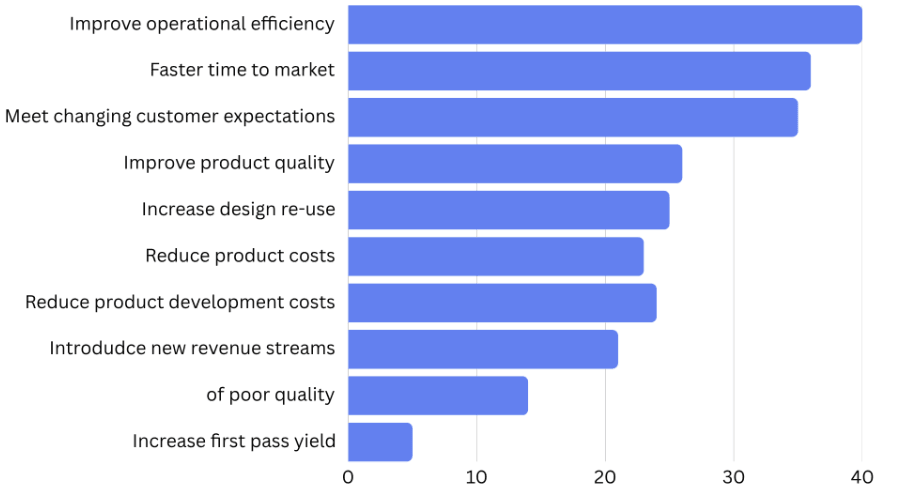
Source: ptc.com
New customer expectations
Customers are expecting direct answers and solutions without much waiting time, faster replies, simple instructions and problems solved first time.
The friction with this stems from the complexity of modern systems and services, often causing technical bottlenecks which slows down the process and causes frustration for both parties.
Brands like Amazon and Netflix have normalized instant, frictionless experiences and customers now bring those same expectations to every support interaction they have. In fact, 87% of support teams report that customer expectations have increased in the past year.
Support teams are under pressure to meet these rising expectations while dealing with more complex products, a variety of different support channels and increased ticket volume. Making it harder to deliver the kind of fast, low-effort experience customers now expect.
Common challenges for companies include:
- Customers struggling to explain exactly what went wrong
- Longer resolution times for more technical issues
- Support teams lacking full context during live conversations
- Pressure to improve speed and satisfaction without increasing support load
- Too much back and forth across chat, email, or calls
How to measure digital customer experience
For customer support teams, measuring digital customer experience usually comes down to 3 practical signals.
- Are issues resolved faster?
- Do customers have to put in less effort?
- Are more problems solved in the first interaction?
Some of the most commonly used metrics to gauge this are things like first contact resolution, average resolution time and customer effort score. For onboarding teams, drop off points and time to completion also show where customers tend to slow down or hit roadblocks.
These metrics matter because they highlight where the experience breaks down. When customers struggle to explain what they are seeing, support takes longer, effort goes up and satisfaction goes down.
That is where cobrowsing can make a measurable difference . It allows support teams to see the issue in real time and guide users directly, improving all the metrics above and bringing in an overall better experience for the customer.
How to improve digital customer experience
Support teams around the globe are responding to this increased consumer pressure by investing in tools like Zendesk, Intercom, Salesforce; or developing their own AI Chatbots and live chat systems, all in a bid to improve digital customer experience. These tools handle simple queries well, but problems arise with complex issues that require a guided solution.
Essentially, digital experience teams are working blind.
If the issue is too complex for a Chatbot or live agent, it’s likely too difficult to describe over a text chat. What follows is often a frustrating back and forth trying to get on the same page. Not only does this slow things down, but it can also hurt resolution times and overall customer experience.
Enter cobrowsing.
Born out of necessity, to meet customer demands. Enabling customer experience teams to see the customer’s screen in real time and assess the issue instantaneously, is a step forward in modern support and solutions.
Tools like UserView, embed directly into the tools your team is already using. No new tabs, no new login credentials to worry about saving, it just sits inside what agents are already using.
How cobrowsing is closing the gap
When it comes to customer support, seeing is solving. When an agent can see exactly what the customer sees, the guesswork is gone. Cobrowsing has been shown to improve first contact resolution by 17%, meaning more customers leave the interaction with their problem actually solved.
- No more convoluted descriptions of complex problems
- Fewer frustrated customers
- Shorter support queues
A happy customer is a loyal customer, and one which feels at ease asking for support knowing they will get direct help.
The future of digital customer experience
Digital transformation improves customer experience when it removes friction, speeds up support, and helps teams solve issues with less effort. The companies doing this well are not just adopting new tools. They are choosing technology that makes support clearer, faster, and more effective for both customers and agents.
As customer expectations keep rising, support teams need tools that do more than just manage tickets. They need tools that help them solve problems properly. Instead of relying on long explanations, screenshots, or slow back and forth messages, agents can see the problem in real time and guide customers directly. Cobrowsing enables faster resolutions, smoother onboarding, and a better overall experience at key moments in the customer journey.
Book a UserView demo today and give your team a faster, clearer way to support customers and solve problems in real time.